
AI Stocks Rebound After a Brutal Week: Is the Semiconductor Rally Strong Enough to Overcome 5% Treasury Yields?
Key Takeaways
- AI and semiconductor stocks are rebounding, helping support the S&P 500 and Nasdaq after a volatile week.
- The U.S. 10-year Treasury yield recently crossed 5%, creating a much higher valuation hurdle for growth and technology stocks.
- AI infrastructure spending remains a major support for chip demand, extending beyond processors into memory, storage, networking and data centres.
- The next phase of the AI rally may depend more on earnings than hype. Companies will increasingly need to demonstrate revenue, margins and cash-flow growth.
- Market concentration remains a risk. Strong semiconductor and mega-cap technology stocks can lift major indices even when the broader market is considerably weaker.
- China is becoming increasingly important to the global chip cycle, with CXMT's planned expansion into NAND memory adding another competitive dimension.
- Oil above $100 and restrictive monetary policy remain macro headwinds, because persistent inflation could keep interest rates and Treasury yields elevated.
- The key question for investors is changing: Can semiconductor earnings grow fast enough to justify premium valuations when U.S. government bonds offer yields around 5%?
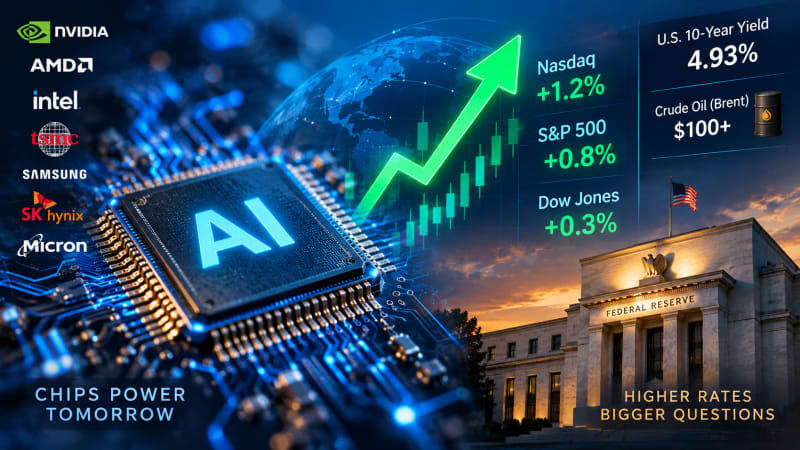
Semiconductor stocks ended a turbulent week with a rebound, helping lift the S&P 500 and Nasdaq even as investors continued to navigate one of the most difficult macroeconomic environments of 2026.
The recovery is notable because several forces that normally pressure technology valuations remain in place.
The U.S. 10-year Treasury yield crossed the psychologically important 5% level earlier in the week. The Federal Reserve has returned to monetary tightening. Crude oil remains above $100 a barrel. And global borrowing costs remain elevated.
Yet investors are still willing to buy semiconductor and AI-related shares.
That creates an important question for global markets:
Can extraordinary growth in AI infrastructure and semiconductor demand remain strong enough to overcome 5% Treasury yields and tighter monetary policy?
The answer could have implications far beyond the technology sector because AI-related companies now have an outsized influence on major global stock indices.
Semiconductor Stocks Help Wall Street Rebound
Wall Street ended Friday on a stronger note after an unusually volatile week.
The S&P 500 and Nasdaq Composite advanced, supported by a rebound in semiconductor shares.
The Dow Jones Industrial Average, however, recorded its largest weekly percentage decline since March.
That divergence is important.
It suggests that strength in technology and semiconductor stocks is helping support the broader U.S. market even while other areas remain under pressure.
Investors can follow the changing global-market picture through the LiveWorldMarket Global Index & Futures Hub, which tracks S&P 500, Nasdaq and Dow futures alongside major Asian and European indices.
Why Did Semiconductor Stocks Rebound?
The rebound is not simply about short-term bargain hunting.
AI infrastructure continues to generate enormous demand for computing capacity.
Building modern AI systems requires far more than software.
It requires:
- advanced processors
- memory chips
- networking equipment
- data centres
- cloud infrastructure
- cooling systems
- power generation
- storage
- semiconductor manufacturing equipment
This means the AI investment cycle is increasingly becoming a physical infrastructure investment cycle.
As long as hyperscalers, technology companies and AI developers continue spending aggressively, semiconductor demand can remain strong even when the broader economy faces higher borrowing costs.
The AI Boom Is Becoming a Semiconductor Capacity Story
The next phase of the AI investment cycle may increasingly be about capacity rather than excitement.
AI models require huge amounts of processing power and memory.
That is creating demand not only for high-end AI accelerators but also for DRAM, high-bandwidth memory and storage.
One particularly interesting development is emerging from China.
Chinese chipmaker ChangXin Memory Technologies, or CXMT, is preparing to expand into NAND flash memory, putting it into greater competition with established memory manufacturers.
The timing is important because AI-server demand is contributing to tightness in parts of the global memory market.
This means the semiconductor story is broadening.
The AI boom is no longer simply:
AI → GPU demand
It is increasingly:
AI → processors → memory → storage → networking → data centres → electricity infrastructure.
That creates a much larger global semiconductor ecosystem.
But 5% Treasury Yields Change the Valuation Equation
Strong semiconductor demand does not eliminate the importance of interest rates.
Earlier this week, the U.S. 10-year Treasury yield moved above 5%, one of the most closely watched levels in global financial markets.
Why does that matter?
Because investors now have a significantly more attractive alternative to equities.
An investor can compare:
U.S. Treasury yield: around 5%
with
Technology stocks: potentially higher returns, but significantly greater volatility and uncertainty.
Stocks therefore need to offer sufficiently attractive earnings growth to compensate investors for taking additional risk.
Read US 10-Year Treasury Yield Hits 5%: Why Rising Bond Yields Could Be the Next Risk for Global Stocks for a deeper explanation of why the 5% level matters.
Why Growth Stocks Are Particularly Sensitive to Bond Yields
Technology companies are often valued partly on profits expected many years into the future.
Those future profits are discounted back to today's value.
When interest rates rise, the discount rate generally rises as well.
The basic relationship is:
Higher Treasury yields → higher discount rates → lower present value of future earnings → pressure on equity valuations.
This is why high-growth technology companies can be particularly sensitive to changes in bond yields.
But there is another side to the equation.
If earnings grow fast enough, they can offset some of that valuation pressure.
And that is precisely what investors are testing with AI and semiconductor stocks.
The Key Battle: Earnings Growth vs Higher Yields
The semiconductor rally increasingly comes down to a relatively simple equation:
Can earnings grow faster than valuations are being compressed by higher interest rates?
Consider three possible environments.
Strong AI Earnings + Stable Treasury Yields
This could remain supportive for semiconductor shares.
If AI-related revenue and profits continue expanding rapidly while Treasury yields stabilize, investors may become more comfortable with the higher-rate environment.
Strong AI Earnings + Rising Treasury Yields
The situation becomes more complicated.
Companies may continue delivering strong results, but valuation multiples could come under pressure.
Stocks could still rise, but earnings would need to do more of the work.
Weak AI Earnings + 5% Treasury Yields
This would potentially be the most difficult combination.
If earnings expectations weaken while Treasury yields remain near 5%, semiconductor stocks could face pressure from both directions:
slower earnings growth + lower valuation multiples.
That is the scenario investors should watch particularly closely.
This Is Different From the Earlier AI Rally
The first stage of the AI stock-market rally was heavily driven by expectations.
Investors were trying to identify which companies might benefit from artificial intelligence.
The next stage could be very different.
Markets may increasingly ask:
Who is actually generating revenue?
Who is converting AI investment into profits?
Who has pricing power?
Who controls scarce infrastructure?
And who can justify today's valuation?
This could create a much wider performance gap between companies that produce measurable AI-related earnings and companies that are simply associated with the AI theme.
For the broader valuation debate, read AI Stocks vs 5% Treasury Yields: Can the Global Tech Rally Continue?.
Market Concentration Is Becoming Important
There is another reason semiconductor performance matters so much.
Major U.S. indices are weighted by market capitalization.
That means a relatively small group of very large technology companies can have an unusually large influence on the S&P 500 and Nasdaq.
Strong performance from AI and semiconductor shares can therefore lift the index even if many other stocks are struggling.
This creates an important distinction between:
Index performance
and
the health of the broader market.
Friday's trading offered an example of why this distinction matters.
Technology and semiconductor shares supported the S&P 500 and Nasdaq, while the Dow ended the week considerably weaker.
Investors should therefore watch market breadth, not simply headline index levels.
Investors Are Still Buying U.S. Stocks
Another interesting signal is coming from fund flows.
Despite higher interest rates, expensive oil and uncertainty around inflation, investors have continued allocating money toward U.S. equities.
Recent Bank of America fund-flow data showed investors buying U.S. stocks at the fastest pace in roughly three months.
That suggests many investors are not yet abandoning equities because of higher bond yields.
Instead, they appear to be becoming more selective about where they take risk.
AI and semiconductor companies remain among the areas attracting the most attention.
Could AI Spending Itself Be Helping Keep Yields High?
There is an interesting contradiction inside the AI boom.
The enormous infrastructure required to build AI capacity requires enormous amounts of capital.
Companies are spending heavily on:
- data centres
- semiconductor equipment
- power infrastructure
- networking
- land
- cooling
- electricity generation
Some of that investment is financed through debt.
This creates a possible feedback loop:
AI investment → higher capital expenditure → greater financing demand → pressure on capital markets
while simultaneously:
AI investment → stronger semiconductor demand → higher technology earnings.
In other words, the same AI investment cycle supporting technology stocks may also contribute indirectly to the high-cost-of-capital environment challenging their valuations.
China Is Becoming More Important to the Semiconductor Story
The semiconductor cycle is also becoming increasingly global.
China is investing heavily in domestic semiconductor production as it attempts to reduce dependence on overseas technology.
CXMT's planned expansion into NAND flash memory is one example.
The company would compete with established players including Samsung Electronics, SK Hynix and Micron, as well as Chinese rival YMTC.
That competition could eventually influence:
- semiconductor pricing
- memory supply
- capital expenditure
- equipment demand
- technology trade policy
- global chip margins
The upcoming U.S.-China discussions therefore deserve particular attention.
Artificial intelligence, semiconductor technology and critical materials are expected to remain important issues in the relationship between the world's two largest economies.
Why the US-China Relationship Matters for AI Stocks
The global AI supply chain crosses multiple countries.
Advanced chips may be designed in one country, manufactured in another and packaged using components and equipment sourced from several more.
This makes geopolitics unusually important to semiconductor investors.
Potential restrictions involving:
- advanced AI chips
- semiconductor equipment
- memory technology
- rare-earth materials
- AI models
- technology investment
can influence companies throughout the global supply chain.
Investors therefore need to monitor not only earnings and interest rates but also technology policy.
What Does This Mean for India?
India is not yet at the centre of advanced AI-chip manufacturing, but the country is increasingly exposed to the global AI investment cycle.
Indian technology companies participate in areas including:
- cloud transformation
- enterprise AI integration
- data engineering
- cybersecurity
- software development
- automation
- digital infrastructure
If global companies continue investing aggressively in AI, parts of India's technology-services ecosystem could benefit from continued enterprise technology spending.
But there is another side.
Higher U.S. interest rates can eventually slow corporate investment.
If businesses become more selective about technology budgets, Indian IT companies could face pressure even while AI remains a long-term growth opportunity.
Indian investors therefore need to watch both the AI spending cycle and the U.S. interest-rate cycle.
Oil Above $100 Adds Another Complication
Semiconductor investors also cannot ignore energy.
Crude oil remains above $100 a barrel.
High energy prices can keep inflation elevated.
Persistent inflation can encourage central banks to maintain restrictive monetary policy.
That creates another chain:
High oil → persistent inflation → higher-for-longer rates → elevated Treasury yields → pressure on technology valuations.
This is why the semiconductor rally cannot be analysed purely as a technology story.
Macro conditions increasingly matter.
What Investors Should Watch Next
Rather than asking whether semiconductor stocks will simply rise or fall, investors can monitor a small group of indicators.
1. U.S. 10-Year Treasury Yield
The first question is whether yields stabilize below 5%, move sustainably above it or begin falling.
2. Semiconductor Earnings
Revenue growth, margins and forward guidance will show whether AI demand is translating into actual profits.
3. AI Capital Expenditure
Watch whether major technology companies continue increasing data-centre and AI infrastructure spending.
4. Memory-Chip Pricing
Memory demand can provide another signal about the strength of the AI-server investment cycle.
5. Nasdaq vs S&P 500 vs Dow
Comparing the indices can help show whether the market rally is broadening or becoming increasingly dependent on technology.
6. Market Breadth
If major indices rise while the average stock falls, concentration risk may be increasing.
7. U.S.-China Technology Policy
Semiconductor restrictions, AI rules and rare-earth policy could become increasingly important catalysts.
Readers can monitor major U.S., European, Asian and Indian index futures through the LiveWorldMarket Global Index & Futures Hub.
Three Scenarios for the Semiconductor Rally
Scenario 1: AI Demand Remains Strong and Yields Stabilize
This would likely be the most constructive environment.
AI infrastructure spending continues.
Semiconductor earnings remain strong.
Treasury yields remain elevated but stop rising sharply.
Under this scenario, earnings growth could continue offsetting valuation pressure.
Scenario 2: Treasury Yields Move Further Above 5%
The environment becomes more challenging.
Even companies producing strong earnings could experience valuation compression.
The market may increasingly reward businesses with strong cash flows and punish speculative AI-related companies whose valuations depend heavily on distant future profits.
Scenario 3: AI Spending Starts Slowing
This could create the biggest test.
If AI capital expenditure slows while Treasury yields remain elevated, semiconductor companies could face:
slower demand + lower earnings expectations + high discount rates.
That combination would make today's valuations much harder to defend.
Is the Semiconductor Rally Strong Enough?
There is no single answer.
A 5% Treasury yield does not automatically end a technology rally.
Likewise, strong AI demand does not make semiconductor valuations immune to interest rates.
The outcome depends increasingly on the relationship between earnings growth and the cost of capital.
The strongest semiconductor companies may continue producing enough earnings growth to justify premium valuations.
Others may struggle.
That could make the next phase of the AI market significantly more selective than the first.
The Bigger Picture
Artificial intelligence remains one of the largest technology investment cycles in decades.
But the financial environment surrounding that investment cycle has changed.
Investors are now dealing with:
AI infrastructure spending
alongside
5% Treasury yields
higher central-bank rates
oil above $100
and
increasing U.S.-China technology competition.
The semiconductor rally therefore faces a much higher hurdle than it did when borrowing costs were lower.
The critical question is no longer simply:
“Will AI continue growing?”
Few investors dispute that AI investment will remain important.
The more useful question is:
“Can semiconductor earnings grow fast enough to justify current valuations in a world where investors can earn around 5% from U.S. government bonds?”
That could become one of the defining questions for global technology stocks through the remainder of 2026.
Related LiveWorldMarket Analysis
Read AI Stocks vs 5% Treasury Yields: Can the Global Tech Rally Continue? for the broader relationship between AI valuations and bond yields.
Explore US 10-Year Treasury Yield Hits 5%: Why Rising Bond Yields Could Be the Next Risk for Global Stocks for an explanation of why the 5% Treasury level matters.
Read Fed vs Bank of Japan: Could Two Rate Hikes Trigger the Next Global Market Shock? for the global-liquidity implications of simultaneous central-bank tightening.
Track Global Indices & Futures to follow S&P 500, Nasdaq, Dow, GIFT Nifty, Nikkei, Hang Seng and major European futures.
Disclaimer: This article is for informational and educational purposes only. Financial markets, Treasury yields, commodity prices and monetary-policy expectations can change rapidly. Nothing in this article constitutes investment advice, a recommendation or a solicitation to buy or sell any security or financial instrument.
Comments (0)
Be the first to comment.
About the author

NISM-Series-X-A Investment Adviser Level 1 examination completed
Amit writes about Indian equity markets, technical analysis, macro themes and the day-to-day mechanics of trading, with a focus on making the flow of global markets legible for retail investors. He has completed the NISM-Series-X-A Investment Adviser Level 1 examination.
You May Also Like
China Exports Surge 36.3%, PPI Hits 5%: Stock Winners & Losers
Geopolitics & Trade · Oct 14, 2026 · 11 min read
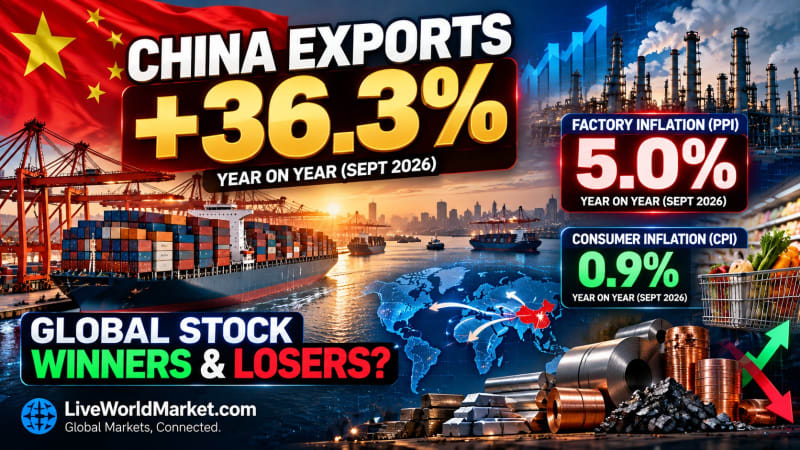
China's Exports Surge 36.3% as Factory Inflation Hits 5%: Which Global Stocks Could Win or Lose? China's factories are shipping more goods overseas than expected, but a sharp rise in producer prices is raising a new question about the profitability of the world's manufacturing powerhouse. Official data released on October 14 showed that China's exports surged 36.3%…
Read more...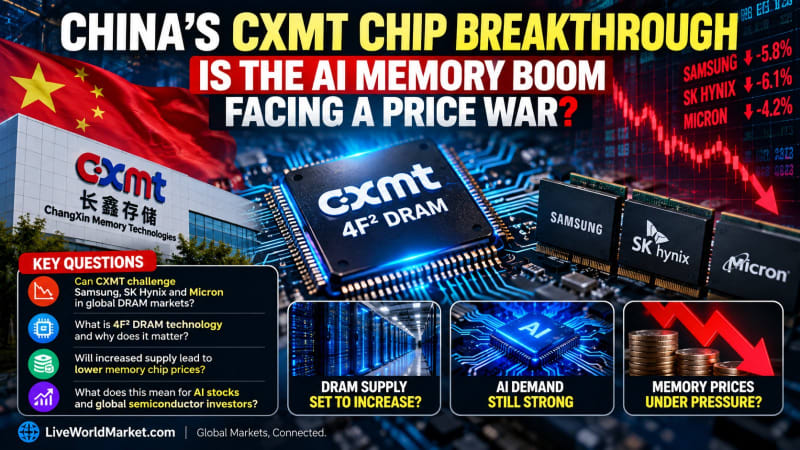
CXMT DRAM Breakthrough: Samsung, SK Hynix & Micron at Risk?
Technology & Sectors · Oct 13, 2026 · 11 min read
China's CXMT DRAM Breakthrough: Could a Memory Price War Threaten Samsung, SK Hynix and Micron? The global semiconductor industry is confronting a new question: Could China's progress in memory-chip technology eventually undermine the pricing power of the world's largest DRAM manufacturers? Chinese chipmaker ChangXin Memory Technologies (CXMT) has reportedly made progress in a…
Read more...
RBI Dollar Window: Can Rupee Near ₹97 Survive $100 Oil?
Central Banks & Rates · Oct 12, 2026 · 9 min read
RBI Opens Special Dollar Window as Rupee Nears ₹97: Can India Protect Its Stock Market From $100 Oil? India's central bank has introduced a new defense against rupee weakness at a time when crude oil prices remain above $100 per barrel. The Reserve Bank of India (RBI) has announced a special dollar facility for three government-owned oil marketing companies, beginning October…
Read more...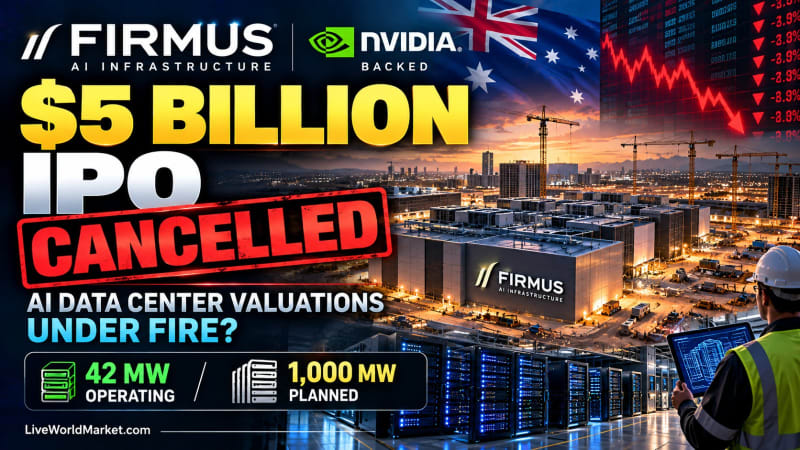
Firmus $5B IPO Cancelled: AI Data Center Valuations at Risk
Technology & Sectors · Oct 11, 2026 · 9 min read
Nvidia-Backed Firmus Cancels $5 Billion IPO: Is Wall Street Finally Questioning AI Data Center Valuations? The global artificial intelligence investment boom has encountered a revealing reality check. Firmus Technologies, an Australian AI data center developer backed by Nvidia, has withdrawn its planned multibillion-dollar stock market listing after struggling to attract…
Read more...
Starlink $8B Spectrum Deal: Telecom Stocks Fall, Towers Rise
Technology & Sectors · Oct 10, 2026 · 10 min read
Starlink's $8 Billion Spectrum Deal: Why Telecom Stocks Fell While Tower Shares Surged A single spectrum deal has sent shockwaves through the global telecommunications industry. On October 8, SpaceX announced an agreement to acquire nationwide 800 MHz wireless spectrum from Grain Management, marking a significant step toward expanding its Starlink Mobile business. The…
Read more...
Two-Thirds of S&P 500 Stocks Rose—Why Did the Index Fall? AI Warning
Technology & Sectors · Oct 9, 2026 · 11 min read
The AI Boom Is Turning Into a $100 Billion Debt Race: Could Borrowing Costs Become the Next Risk for Tech Stocks? For the past three years, artificial intelligence has been one of the biggest forces driving global stock markets. From Nvidia's extraordinary rise to the massive expansion of AI data centres, investors have rewarded companies promising to build the infrastructure…
Read more...
AI Debt Boom 2026: Could Borrowing Costs Hit Tech Stocks?
News · Oct 8, 2026 · 11 min read
The AI Boom Is Turning Into a $100 Billion Debt Race: Could Borrowing Costs Become the Next Risk for Tech Stocks? For the past three years, artificial intelligence has been one of the biggest forces driving global stock markets. From Nvidia's extraordinary rise to the massive expansion of AI data centres, investors have rewarded companies promising to build the infrastructure…
Read more...
$100 Oil Is Back: Which Stock Markets and Sectors Are Most Exposed?
Commodities & Energy · Oct 7, 2026 · 12 min read
The $100 Oil Test Has Arrived: Which Global Stock Markets and Sectors Are Most Exposed If Crude Stays Above Triple Digits? Oil above $100 is no longer a hypothetical risk for global markets. Brent crude traded above $101 a barrel on October 7, while U.S. West Texas Intermediate hovered near $90 as investors confronted a combination of Middle East supply risks, attacks on…
Read more...
Stocks Hit Record Highs While Bond Yields Flash a Warning: Which Market Is Right?
Global Markets & Economy · Oct 6, 2026 · 9 min read
Stocks Are Hitting Records While Bonds Flash a Warning: Which Market Is Right? Something unusual is happening across global financial markets. Stocks are celebrating. Bonds are warning. On October 6, global equities climbed to their highest level in roughly two weeks. The S&P 500 reached another record, while the technology-heavy Nasdaq extended its run of all-time highs. The…
Read more...
France Bond Spread Hits 2011-Era Extreme: Is Europe’s Debt Risk Returning?
Global Markets & Economy · Oct 6, 2026 · 9 min read
France’s Bond Spread Just Hit a 2011-Era Extreme: Is Europe Quietly Re-Entering a Sovereign-Debt Risk Trade? For much of 2026, investors have been focused on the Federal Reserve, oil, inflation and the extraordinary resilience of AI-driven equity markets. But another risk is quietly emerging in Europe. The gap between France’s 10-year government bond yield and Germany’s…
Read more...